
Letter 36
Articulate ideas, instigate change. Dance as discursive language system, AI Art and Design Hotline.

You’re getting this message because at some point you signed-up on my Twitter Medium LinkedIn or Insta. There are three sections: Story, Art, and Design.
(To all the new readers… here’s a quick bio on me, just in case you can’t quite remember…)
Always free. Always interesting.
STORY
Articulate ideas, instigate change.
Obama speech writer Sarada Peri once challenged me and everyone else in our small group workshop to ask ourselves “What is my urgent, burning truth?” when writing a speech.
She said it with a clear-eyed directness that made it immediately obvious that this was the true measure of writing a speech worth hearing: are you expressing a truth?
I love her advice. I often think of Sarada’s urgent, burning truth challenge when I look at a paragraph or scene or headline. Am I delivering a truth that the audience needs to hear? Am I just writing plot, or revealing truth? Am I telling, or transforming?
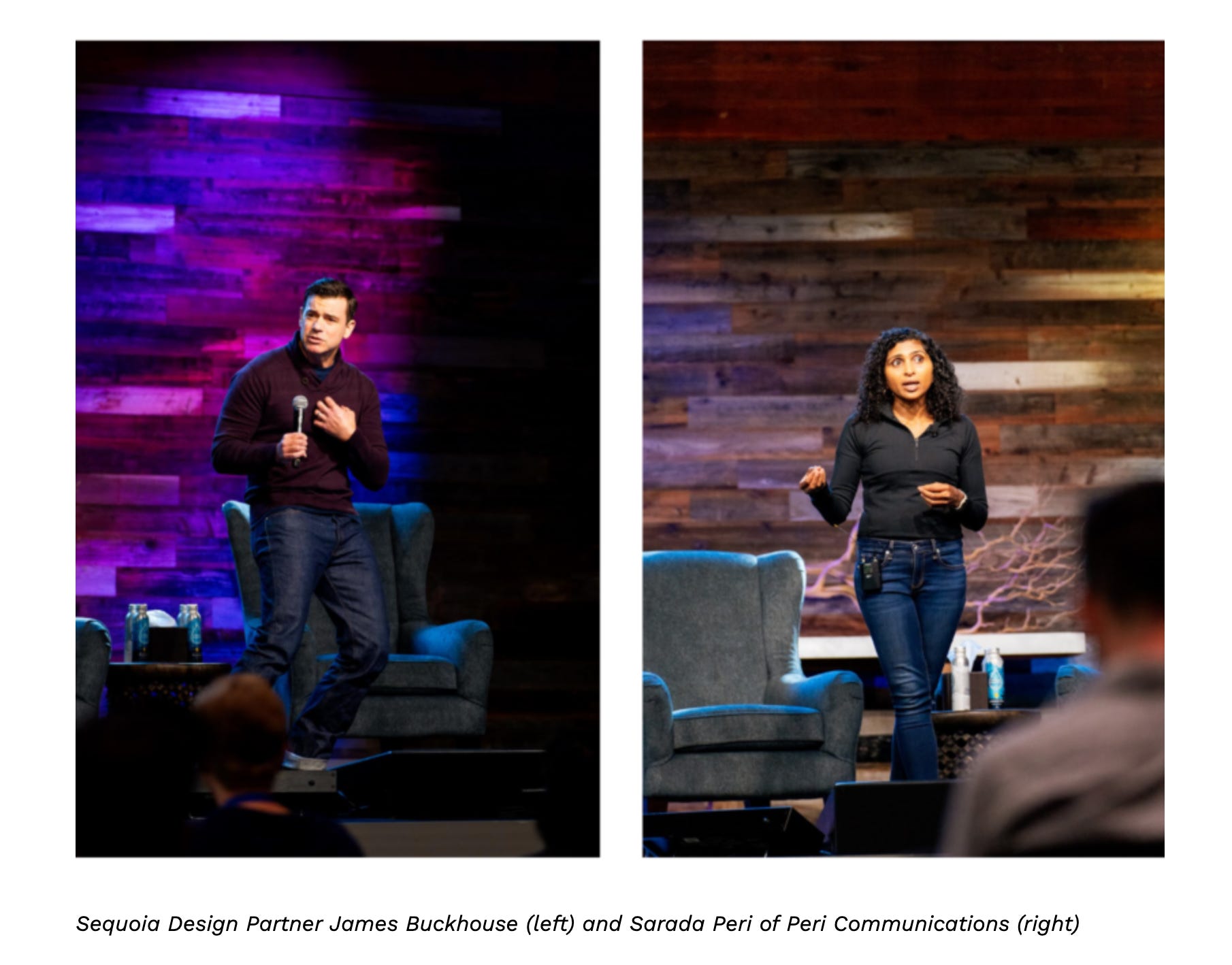
Here’s a pic of the two of us opening and closing a recent conference. I’m talking about the need to transform your audience and she is giving you ways to do it. Not a bad combination.
While I’ve been commuting to work this week I’ve been talking to my AI-self via my 24-Hour Story, Art and Design Hotline +1 (650) 675-5734. I’ve been asking myself big questions and working through the answers. Sometimes this all spirals into a vague and slightly tedious semi-solipsism… the phone call equivalent of that Spider-man meme where the Spideys all point at each other… but other times it feels transcendent. Hearing yourself tell yourself something you already know, but need to hear, can be the hope you need to keep chasing your curiosity.
Part of setting up my AI-self was going through all the data I would use to train it. Here is an article from 2012 that made the cut. I hadn’t yet fully figured out my current take on story, and yet 12 years ago I mostly already knew: story is the reason why someone should care.
2012

Articulate an idea to instigate change.

A business, a brand, a love-affair, a pop song, an aria, a novel, an insurgency, a product, a pitch, a campaign, a policy, a problem, a hypothesis, an opportunity, an answer to a question you never knew you had: this is story.

At the heart of all work is story. Story orders sensations and encodes urgency. Story defines an emphasis hierarchy and encapsulates value. Story wraps hope in a blanket of action and tucks it into your pocket ready to share.

Emboldened by language, we think we know story, but story is a mechanism hidden in plain view; our familiarity is specious at best.

Yet carefully, bit by bit, we can stop listening to the story and start to pay attention to the tiny word-machine at work inside our brains.

If we want others to feel the same way we feel, our only medium is the mechanism of story.

High-level idea: Story is the reason why someone should care.

Low-down: Story is a structure you can break down into manageable chunks and the artful techniques can be learned.
ART
See the world uniquely and do something about it.
I got a call from a friend working on a new film. Helping someone work through a story is my favorite kind of work. This one will be visual, emotional, and deals with an important, difficult topic. Without a doubt, it has an urgent, burning truth.
It uses dance as a type of second soundtrack, a type of emotional amplifier. The dance is not literal, descriptive or diegetic—it is expressive and haunting and delivers an augmentation to the emotions behind the story. It is the physical embodiment of the emotions felt, but not said.
I began to think about all the areas in our experience that exist in the realm of discursive communication—in film it’s the tone of voice, lighting, camera movement, costume—all those hidden vocabularies that help you know how to feel (even if you can’t always explain why). You recognize the bad guy even before he does anything bad just from the music and the lighting and the body language.
The night before I had been reading James Gleick. He writes in The Information: A History, a Theory, a Flood about purposeful redundancy in communication—such as pilots using extra information to disambiguates sounds that are easily misheard, like saying fife and niner instead of five and nine as those two words tend to sound the same over the radio. The same goes for B and V (Bravo and Victor) and M and N (Mike and November). He goes on to describe the language system of African talking drums. The main idea of the talking drums is to use two pitches to emulate the high-low tonal qualities of spoken language. To disambiguate between words with the same tonal patterns, additional context is needed in the form of extra clarification phrases for the sifting disambiguation to fully resolve.
It had me thinking of other moments of intentional redundancy in communication, such as moments of inline definition or strategic repetition as ways to ensure what was received was the same as what was intended.
Repetition… there’s so much to uncover in that simple concept. Whether it’s the advertiser’s exploitation of the psychological phenomenon of “familiarity bias” where we tend to express a preference for something we’ve seen over and over again as our brain tells us “it must be good because it hasn’t hurt us yet” which has led to advertisers putting a name, brand or product in front of us over and over just to tip our us into the bias of the familiar… or the Ancient Greek orator’s technique of epizeuxis, the rapid triple repetition of a phrase to add intense emphasis.
This technique was first attributed to Demosthenes in the 4th century BCE. He was asked what are the three most important aspects of rhetoric? And he replied “Action, Action, Action.” In this case, action meant the physical gestures orators made with their bodies to enact, demonstrate and augment their points.
Physical discursive augmentation… sounds a little like dance… That super-text of emotive truth.
We do not know what actions Demosthenes demoed as he said this. I can only hope they were on par with this.
DESIGN
24-Hour Story, Art and Design Hotline
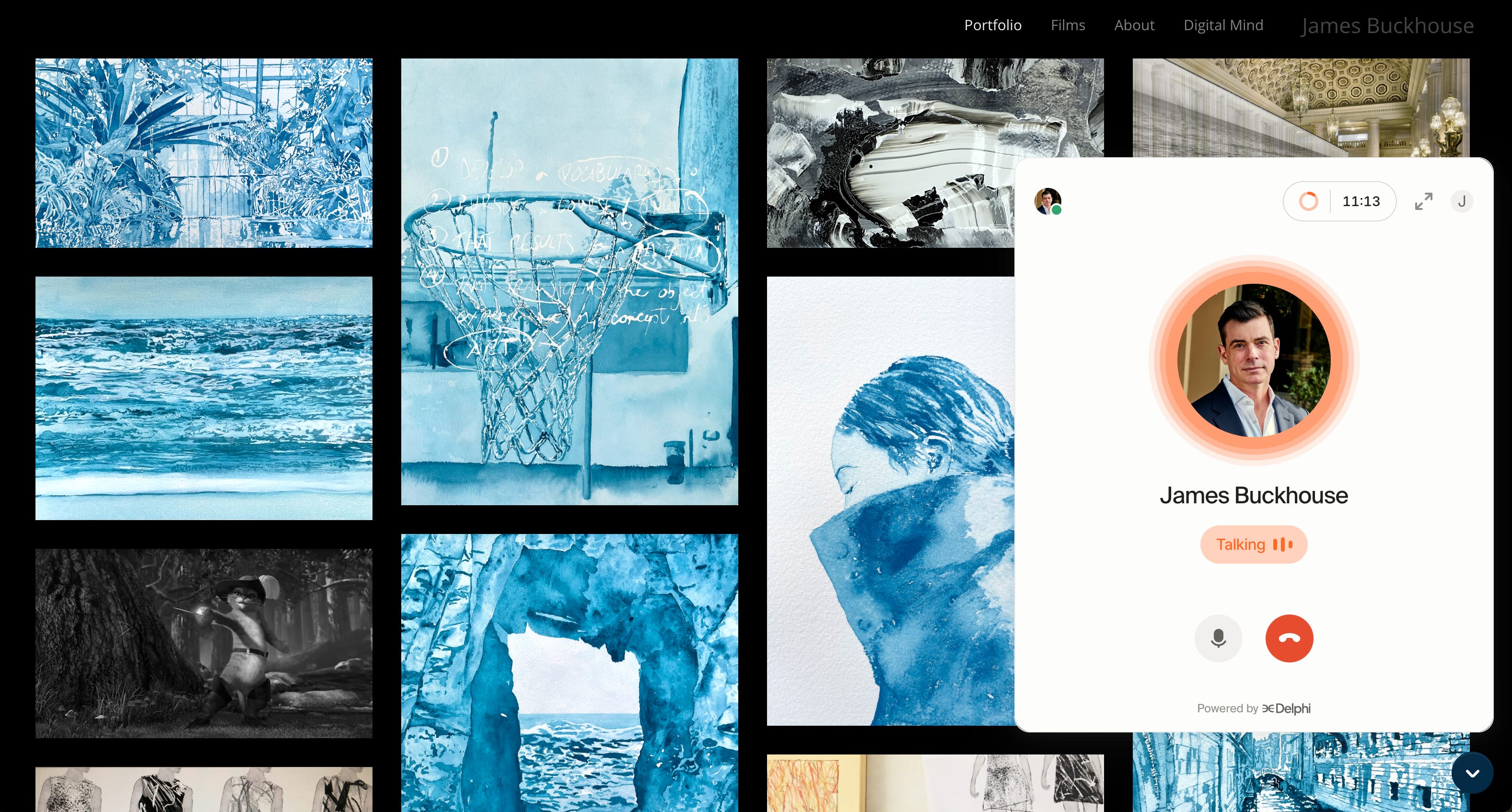
More on my AI Second Self, because it’s just so strange and so new… It’s been about a week that my 24-Hour Story, Art, and Design Hotline has been active. People have called in from all over the world, asking me about how to write headlines, design products, write toasts, negotiate salaries, talk to their bosses, design shoes, design sales decks, design pitch decks, decorate for a party, and more. Some just want to chat… some talk for a very long time. All of it is wonderful. Some of the callers are friends, others are total strangers. I sometimes call the hotline myself just to talk through my own creative ideas, to use my own Digital Mind as a safe sparring partner for what I’m trying to create next.
Interestingly, somehow, because it’s a digital version of me, not the actual me, people don’t feel bad about taking up my time. So they’ll talk for a while, slowly working through an idea, and not feeling guilty about all the time it takes, knowing that I’m still happily working away on other projects in real life (and also simultaneously talking to many other people at the same time via my AI).
Give it a try
24-Hour Story, Art and Design Hotline
+1 (650) 675-5734
(you can call or text, it works like a normal USA phone number).
If you do call, let me know how it went. You can reply here and tell me what was good, bad, or strange. I can edit and adjust the inputs feeding the AI, so please help pay it forward if you liked something (or if something was off) so I can try to adjust.
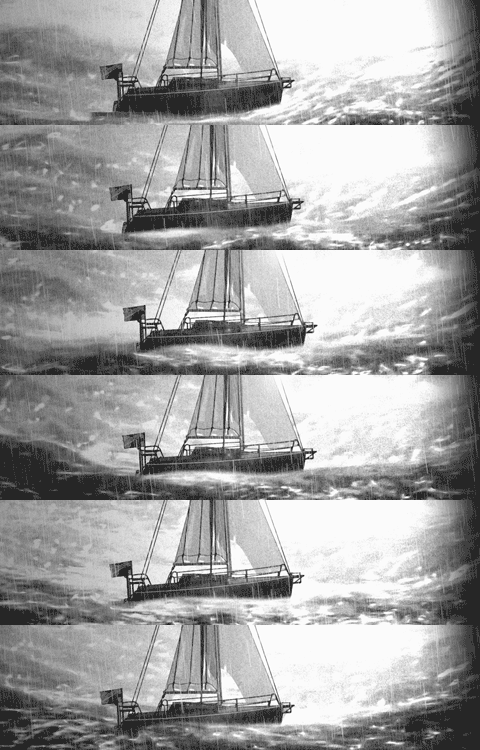
Here’s an animated gif of me sailing off into the non-deterministic joy of traversing latent space… somehow this boat here in the belly of some unseen wave feels like that moment of gradient descent when the math meets the meaning and it feels like we are finally getting somewhere.
The waves also remind me of the shape of a cosine wave… and that makes me think of cos similarity and all those attempts to cope with The Curse of Higher Dimensionality. Are we succeeding? Are we pointed in the right direction? Who knows… but it does feel good to sense the pull of the universe.
But back to the Hotline. Why does it feel normal and almost pleasant to call a digital ghost? To talk to a math moment that feels human-ish? Why is it comforting to talk to someone without the cost of the social compact of taking up someone else’s time…. Why is it OK to feel emotionally supported when an AI offers positive feedback? I know I feel that way when an AI gives me positive feedback on an idea… We know it’s not real, yet it’s also not untrue.
Thanks for reading. If any of this was enjoyable to you, or lit a spark of imagination inside your mind, please reply to this email. I very much enjoy hearing your thoughts.
Do you have a friend who might enjoy this? Why not forward this newsletter to her or him? And say… I saw this and thought of you.
Also—if you run your own substack, please consider listing me as a recommended site? I’d really appreciate it. Thank you !!!! to the writers and substack managers who have listed me as a recommended site.