
Letter 24 - 2024
Impossible Dream, Living Code, Design as an Act of Love

You’re getting this message because at some point you signed-up from my Twitter Medium LinkedIn or Insta. To all the new readers… here’s a quick bio on me, just in case you can’t quite remember…
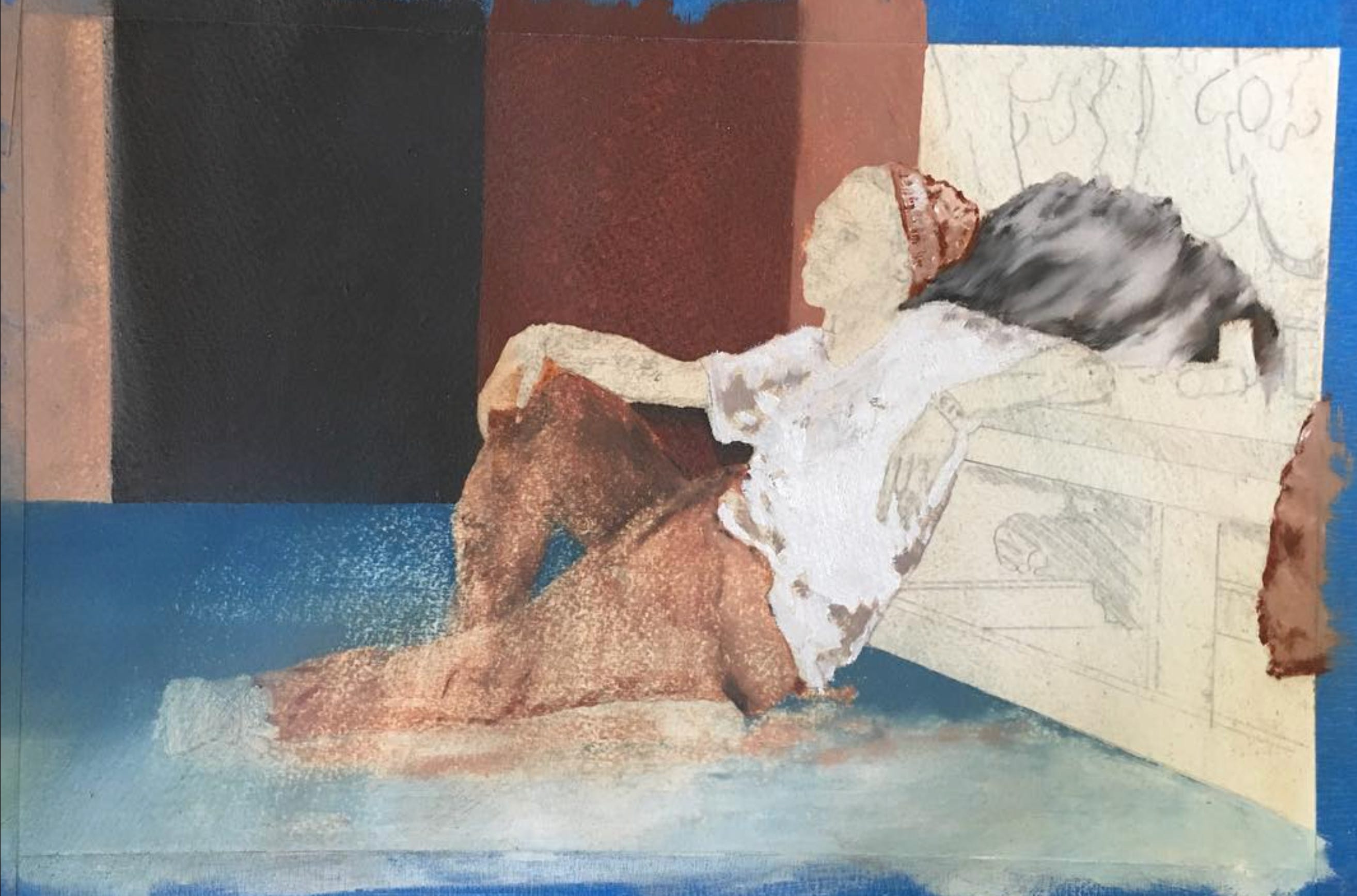
STORY
Like a heart-sick teenager staring at clouds and seeing a secret hope, I have a dull ache in me, a pull, a longing, that attracts me to a seemingly unsolvable problem: A third-rail big mistake that seduces me none-the-less. I dream of a type of story that combines images and words—but is not an illustrated novel or a graphic novel or graphic design—but some other combination of written and visual language… yet somehow retaining the best aspects of both.
Text, when crafted carefully, constructs images in the mind of the reader. It also constructs emotions, vibes, intuitions, suspicions, and recognitions. The partial descriptions provided by text allow for the reader to fill in the blanks and construct a richly personal vision of the characters, settings, and situations. Great text describes with just enough shape to evoke and yet purposely holds back to make room for the reader’s personal mental rendering.
Images achieve the same “mental rendering” in the imagination of the viewer, but this time it’s not about what it looks like, but what it all means. The story (and meaning) is generated by the viewer. Sure there is often a title or explanatory text that wants to guide the “reading” of an image, but in the end, the viewer still makes up her own mind and sees in a work what she or he decides to see. The image opens the door, but the viewer is the one who walks through.
Both of these approaches are deeply satisfying—we get to participate in a work by completing it in our own minds. We render the characters of our favorite books and they feel real, personal, loved, and exactly right. Our favorite paintings evoke a resonance in us where we feel like we know the story and the meaning, even if we couldn’t really tell it to you. We love these works because we are involved in their creation—their final creation—which is co-created by us as we experience them.
Most attempts to combine text and images manage to destroy this delicious “mental rendering” in the imagination of the reader. Illustrations of characters in a novel tell us that the character looks like this and only this—closing the door to co-creation. Explanatory wall text in a museum“explains” an image, but often reduces it to that which can be explained.
The current, existing, successful combinations of text and image tend to give in to one side more fully than the other. Tolkien’s books offer us maps and glyphs, but stop short of providing full illustrations. His books render whole worlds in our minds, but use very little actual drawings to get us there. Manga and graphic novels go in the other direction: images do tremendous work to tell the story, with visible text mostly limited to dialogue and the briefest of stage-setting.
Is there any other way? Is there some new combination of words and images that somehow retains the delicious pleasure of co-creation with the audience’s own imagination?
I’ve gone on a hunt to find out. I’ve collected evidence from different sources to try to find a new path forward. Illuminated manuscripts. Shooting boards from films. Meso-American codices. That strange moment in Alexandria when Egyptian and Roman cultures co-existed and the writing (and graphic) styles inter-mingled. From China and Japan: scrolls and screens and woodblock printing. From early computer-culture days: ascii adventure games. Early Bibles. Decorated texts. Picture books. Wordless books. Swiss graphic design. Parisian posters…
And from all of this. All these different attempts from across time and many cultures… I think I’ve hatched an idea worth nurturing. it’s different from all of these other approaches, but remains informed by each. The idea I’m cooking is personal, partial, and quite possibly a terrible mistake. And yet.
And yet.
What if I’m onto something?
What if this becomes the new way for a writer/designer/artist to create? What if this effort brings just a little bit of delicious joy to those few viewer-readers who crave exactly this type of story? What if this becomes your favorite kind of book? What if this changes the way we read? What if the “mental rendering” of the story is so vivid that you feel like you saw a movie, even though the only movie was the one playing in your head?
What if this terrible idea is actually good?
Good or bad, I’ve decided to try. Wish me luck. If I get even a single combination of image and text that does the fragile magic I hope it might, I’ll share it then. In the meantime… my experiments continue.
ART
I usually paint “blue paintings” but I do sometimes paint with other colors. I did this painting of a hand in 2018. I was designing an app, but I felt disconnected from it, and so I wanted to see the world from the app’s point of view. As if the code had a perspective on life. As if the code had feelings and language and a longing to understand us.
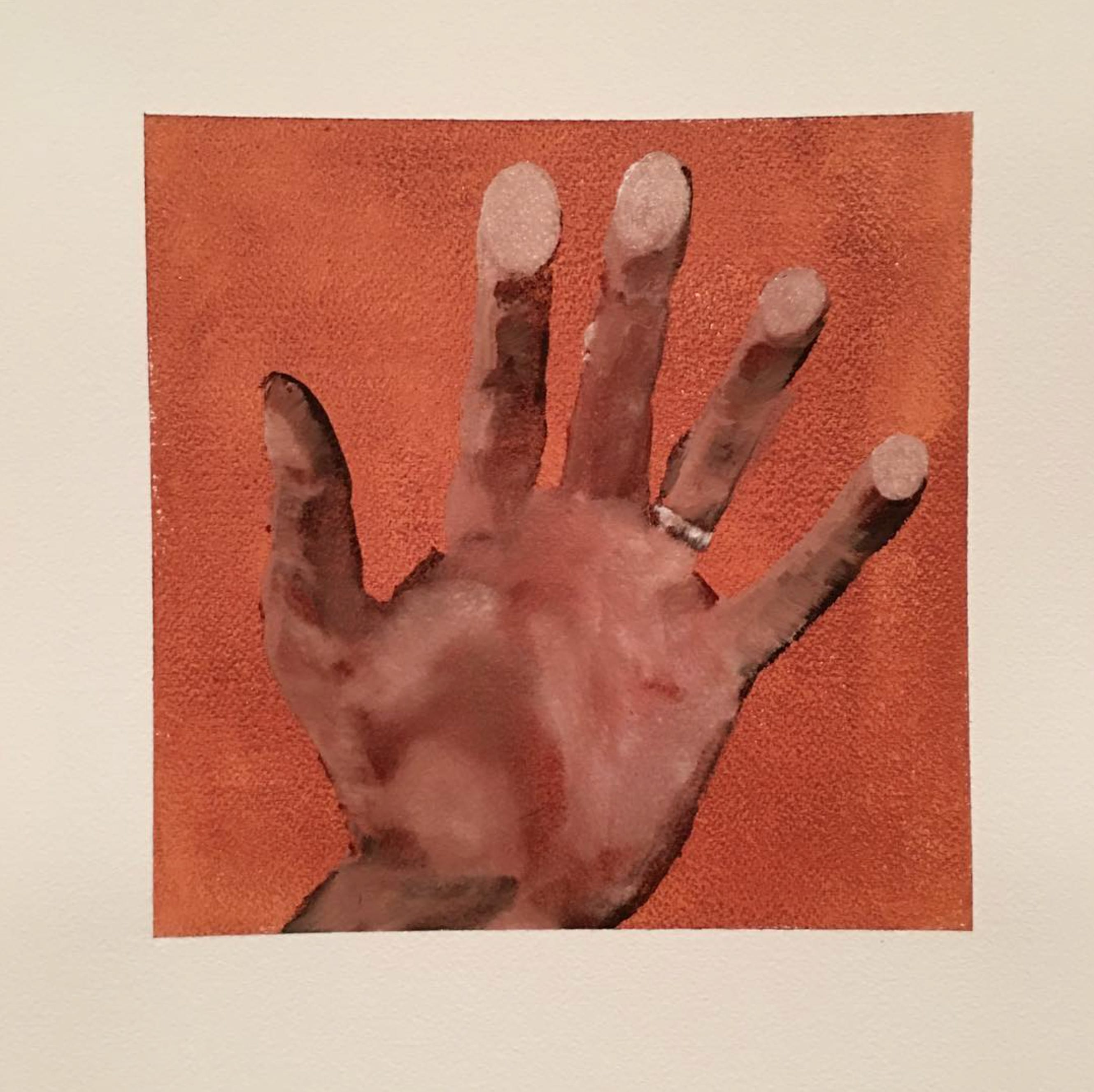
Here you see my hand touching the glass of the phone from the point of view of the phone. You can just detect my fingers pressing against the glass and going slightly pale as the pressure pushes the blood from my finger tips. This painting was done in a single sitting, so fast that it was all wet-on-wet. I wanted to capture a moment in time. There is something to this two-sided glass moment. Our phones know us. Our apps know us. And have opinions about us. Who, exactly, is in the zoo? Who is behind the glass?
DESIGN
Guts. We must have guts. We must try. We must strive. We must nurture fragile ideas. We must embrace intuition. We must gather evidence, but never abdicate our thinking. We must seek truth. We must seek beauty. We must love. We must get curious about what others overlook. We must we must we must.


Here is a drawing from a ballet I loved (but did not work on) that used phones on stage. It’s drawn with dry-erase marker and pencil. The dry-erase gives it a feeling like it’s being blown apart by heavy winds or scrubbed from existence by some unseen hand. Next a charcoal drawing of a wave… somehow the charcoal makes it feel more alive… like it’s moving. Last—a watercolor of Wittenstein and his “language is a game.” Surely he looks at the wave and shouts (in a little in-joke to himself) “Water!” But does he smile after his own joke? Or does he play it cool and dead-pan, never breaking character?
In design we play language-games, too. Our worst designs are secretly set-ups where we hope to win our own language-game… a type of selfish solitare with a loaded deck: tell-tale signs include jargon, complicated “patterns” that are only natural if you are the one who created them, frustrating betrayals of what-means-what, communication that relies on assumed knowledge, solutions that are easy only if you already know the answer.
In contrast, our best designs guide the person for whom the design was intended towards a shared, co-created language-game and that same person—that wonderful, cherished, beloved person—succeeds at the game she helps co-create and we win together. Great design is a duet between the person experiencing the design and the designer. Great design is co-created by the user as she uses it.
Finding a way to design something that is novel, familiar, intuitive, innovative, brilliant, comprehendible, generous, yet still somehow bold, new, and actually great… to do all of that… we need love. Love for the user. Love for the problem. Love for excellence. Love for giving a damn. Love for getting it right. If you see great design in the world—and I mean really great—please let me know. Send it to me. I want to see every example of great design in the world. Yours or someone else’s. I want to see design that understands the first rule of design’s language-game was, is, and always must be—love.
Thanks for reading. If any of this turned over a card of curiosity in your mind, please let me know. You can reply to this email, or reach out to me on Twitter Medium LinkedIn or Insta.
Do you have a friend who might enjoy this? Why not forward this newsletter to her or him? And say… I saw this and thought of you.
Also—if you run your own substack, please consider listing me as a recommended site? I’d really appreciate it. Thank you to the writers and substack managers who have listed me as a recommended site.
—Buckhouse