
Letter 20 - 2024
Sing your life, Power of Anti-Painting, Teaching Robots to Love

Dear Story, Art, & Design reader…
You’re getting this message because at some point you signed-up on my Twitter Medium LinkedIn or Insta. There are three sections: Story, Art, and Design… and occasionally a few bonus sections at the end. Always free. Always interesting.
STORY
I’m giving a lecture next week at Stanford on how to write your story, but it won’t be the lecture the students are expecting—how to pitch yourself to get a job—but instead we’re going to workshop the yet-to-be-written story of the journey you still have left in this brief life. What you want to become.
This is a big topic (in some ways the only topic) for all of us, no matter our age.
What will the story be of your remaining days? What adventures? What contribution? What love? What great work? What learning? What challenges? What hope? What friendship? What revelations? What questions? What will be the journey you will take between now and when there is no next step?
To figure it out, you can’t just ask yourself, “how do I want to spend my time?” for many wonderful and important endeavors require spending much time doing activities you would not normally choose to do, just ask anyone who has gone to medical school, made a feature film, or started a company. Dante (and Francis Ford Coppola) both assert: “The path to paradise begins in hell”
But all of those things are worth it in the end.. so how do you figure it out?
Instead start with questions about meaningfulness;
What relationships do you hope to strengthen?
What meaningful work can best be done by you?
What difficult choices have you made that have made all the difference?
Your inner character is revealed by the choices you make when it really matters. One exercise the students will do will be to write down five choices they have made that have made a difference in their lives. I invite you to do the same. It can help you figure out the person you are, and help define the person you want to become.
What are five choices you have made that have made all the difference?
Write down the choice you made, why it mattered
Write down the choice you made, why it mattered
Write down the choice you made, why it mattered
Write down the choice you made, why it mattered
Write down the choice you made, why it mattered
If you are writing a screenplay, consider doing the same for your characters. If you have a character that is flat, that feels replaceable, that no one really cares about… before you try to solve it with a crutch—by giving them a memorable trait, an exciting scene, a convenient just-what-we-needed-thing-in-their-pocket, or killing them off—before any of that… instead write down all the choices in their life… all the important choices that happened before the movie started—true choices, ones that revealed their inner character—and use that to figure out what’s going on beneath the surface. If you uncover a flaw, is it their undoing? Or the thing they overcome? If you uncover a strength, does it give them a way out of a tricky problem? Or cause them to be overconfident at the wrong time and cost them dearly. Or, both at the same time? Inner character is revealed by choices—read more about this in Robert McKee’s wonderful follow up to Story, called “Character.”
No back to your own life. What have your choices revealed about your inner character? What can you learn from yourself… so that you can write your future story and live a meaningful (and marvelous) life?
ART
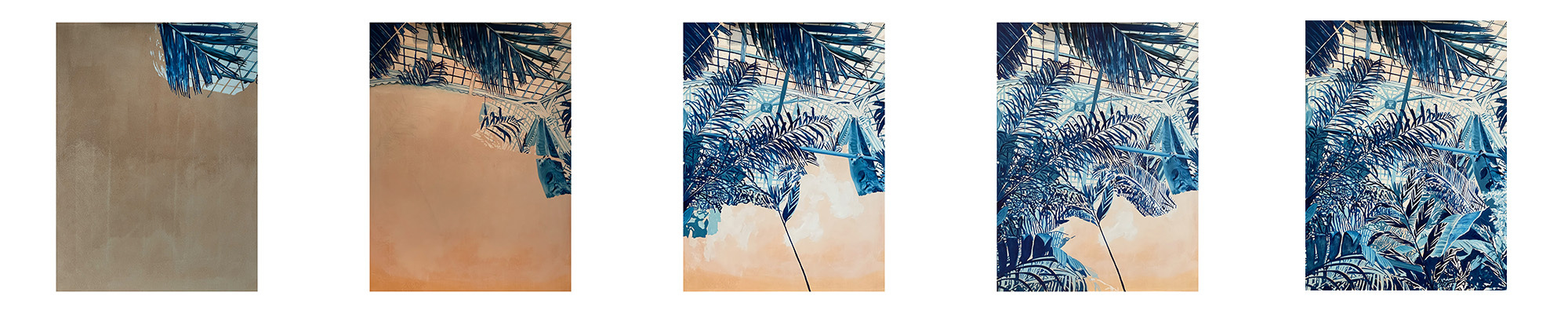
This week I finished the first pass at a painting I started two years ago. The impossibly slow pace comes from going blind in one eye for a year which made it hard to triangulate the exact position of the tip of my brush in space. I kept “missing” the canvas—overshooting and thudding instead of just getting exactly what I wanted.
I’m all healed now… and it’s glorious to paint again. but check this out. The first pass being done doesn’t mean the whole thing is done, although in the past I would have thought so.... Now is the time for all the little bits that take it from being “perfectly fine” to something that almost moves as you stare at it.
It should vibrate in your brain. It should feel like you are entering into the space of the image. The image should feel alive, spatial, moving. It should feel like the start of a story where you already know it will change you—that on the other side of the adventure awaits the you that you’ve always wanted to become. When I’m all the way done, it will look very much like the current completed first pass… but it will feel very different. I want it to feel alive.
Once before I painted an image that seemed to move when you looked at it. Although it’s hard to tell from this Instagram photo. But in person, you can almost hear the waves meet the shore. And in my mind I can hear the Bach that played in the studio while I painted it.
This has become my goal: To create work that lives, that moves… even if only in the imagination of the beholder.
One way to get there—to make those tiny changes that start the painting in motion—is to work the surface. This particular painting is done on gessoed board. Flatter than flat. And the first pass looked like it: almost like a collection of colored shapes, but where every shape was a single tone. This can be interesting, but wasn’t what I wanted. I want you to wonder just a bit “how did he do that?” How was that shape painted? And in this context, the perfectly flat shapes containes less mystery, less curiosity.
To invite the viewer’s curiosity, I’ve started to paint with just a bit of terp and then wipe it up and blot to “pull up” bits of the surface layer of paint… so that instead of a totally flat zone, you get something that makes you wonder how did he paint that? The answer is I anti-painted with thinner, and then wiped like I was prepping an intaglio plate or blotting a watercolor.
The other piece of the technique I’m using is to have a very warm, orange-sienna-rust underpainting that you can just see through the gaps in the blue paint. The opposite secondaries vibrate when next to each other and the painting starts to move.
DESIGN
My little AI Art Agent buddy continues its daily routine of walking the streets of Paris, Tokyo, and LA and seeing what’s up at all the galleries and museums. I’ve written about the project before… it’s harder than it looks to code up the little guy… but most of the difficulty is making APIs talk to each other in a reliable way.
I’ve expanded the robot’s route, with many more galleries than before, and in doing so I expanded the complexity (and failure rate) of retrieving a daily glimpse into what’s happening in the art world. So I’m at work on new solutions for the art-loving reader of AIArtAgent.com.

The current challenge: How might I design an automated system that delivers at least one good image for 95% of the galleries and museums? Harder to do than it sounds. You can follow along (and enjoy with me, as the agent sometimes falls flat on its face) at AIArtAgent.com. Is the visual design all the way there? Nope. Not at all… none of the designers on this newsletter list will get jealous of the visual design work… full as it is with bad choices and sometimes-broken css etc.
…but the project is starting to figure itself out, even with all the stumbles.
The little robot is developing character… starting at first to be too serious with its job… writing in a factual, formal style. Trying too hard to be a “good reporter” but… over time… might there eventually be a way to bring in some sense of taste? Can you even teach a robot taste? Who knows… but you can try to nudge towards it. I am starting to imagine that we’ll all start to care much more when we start to see the robot begin to care, really care, about the art. And to make choices.
In the meantime, it’s a perfectly useful list of galleries. Especially for Tokyo.
PEOPLE YOU SHOULD KNOW
Writer you should know: Holly Brubach. Please consider reading her “Dedicated Follower of Fashion” while waiting for her new book to hit shelves. Compare Holly’s fashion writing with today’s fast-thumbed influencer and you’ll learn what it means to give a damn about getting it right.
Artist you should know: Glenn Ligon. Two decades ago I talked my way into teaching at Stanford in the not-yet-fully-established Digital Art Dept. My pay was zero, but I was allowed to apply for grants and managed to pay myself that way. One of the projects I did was to create a collection of screensavers as digital public art. The show became something of a cult-classic and to this day (25 years later?) still travels around and recently showed in Olomouc, Czech Republic.
I bring this up because Glenn Ligon was one of the artists I worked with on the show. I animated one of his thick/impasto typographic paintings and turned it into a screensaver—the idea was to bring art into artless spaces. And in my mind, the office environments of that era were some of the most poetically impoverished sites for intervention. The show was a minor hit. And I’ve loved his art ever since. He’s now marvelously, spectacularly successful (well deserved! So good!) and if you don’t know his work, it’s time to check it out.
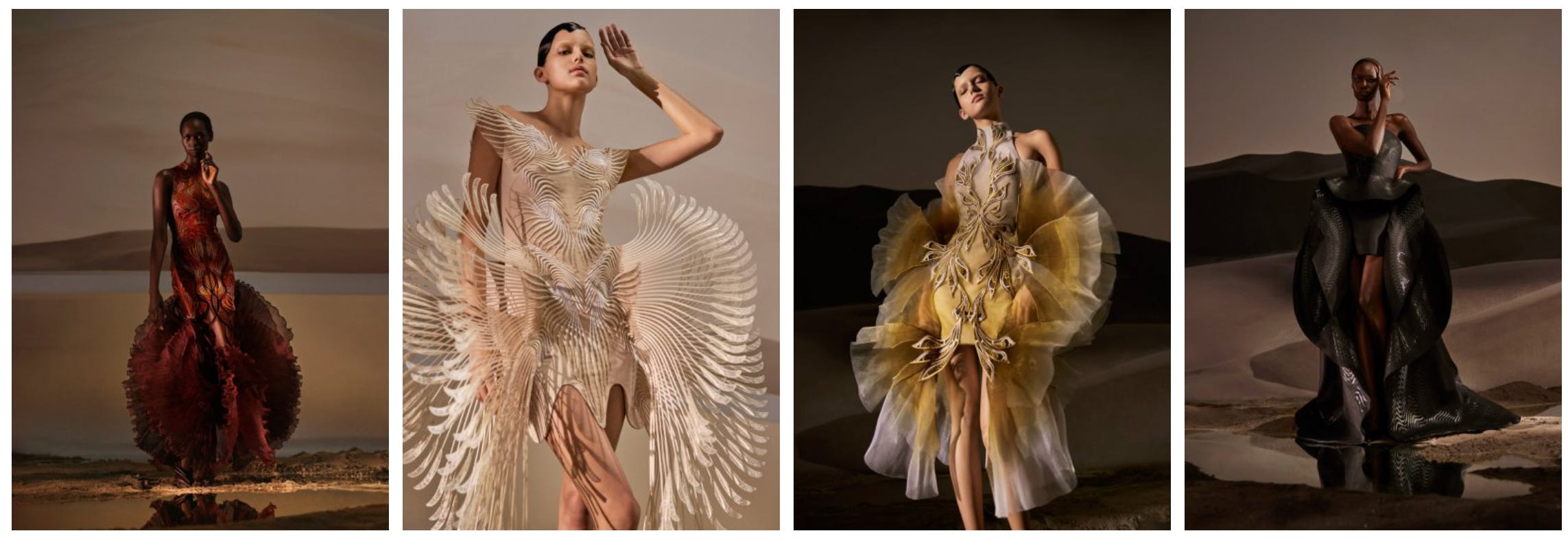
Designer you should know: Iris Van Herpen. She’s a genius. If you’re in Paris, go see her show at the MAD.
Thanks for reading. If any of this turned over a card of curiosity in your mind, please let me know. You can reply to this email, or reach out to me on Twitter Medium LinkedIn or Insta.
—Buckhouse